Where Our Graduates Go
Data from the Strategic National Arts Alumni Project (SNAAP) and the Bureau of Labor Statistics demonstrate that while many art students remain in the "Creative Industries," a significant portion of them translate their skills into diverse sectors.
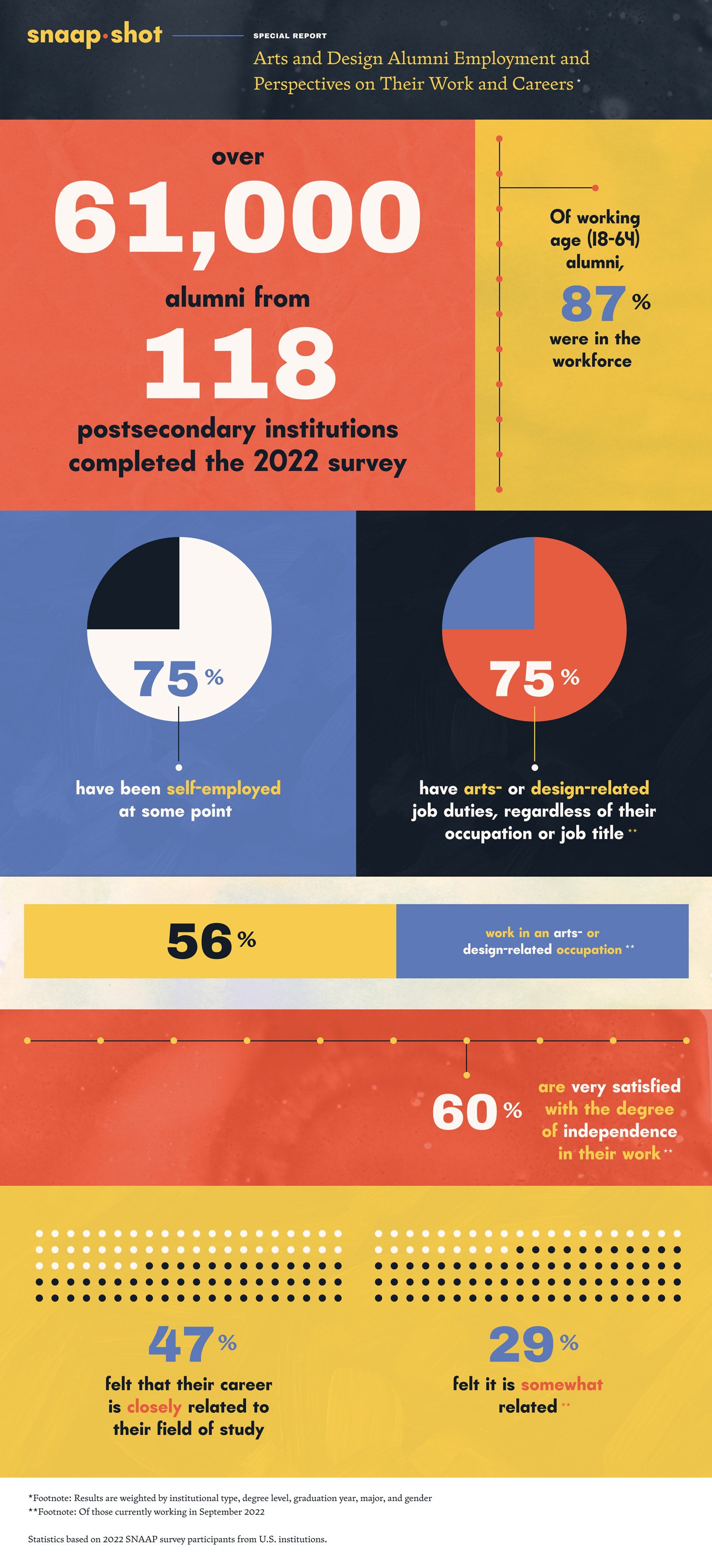
The Translation of "Visual Language" to Professional Success
Art students succeed in non-traditional fields because they are trained in a specific "meta-language" that is highly transferable:
Iterative Problem-Solving: The "critique" process is essentially the scientific method applied to aesthetics. Students learn to take feedback, pivot, and refine—a skill vital in Agile software development and corporate management.
Visual Literacy in a Data-Driven World: As data becomes more complex, the ability to interpret and communicate information visually (Information Design) is a high-demand skill in finance, tech, and governance.
High-Level Observation: Fine arts teach "seeing" rather than "looking." In fields like medical diagnostics or criminal justice, the ability to notice subtle patterns and anomalies is a direct extension of studio training.
Innovation through Constraints: Working within the limits of a medium (or a budget) forces students to develop innovative, out-of-the-box solutions, which is the cornerstone of entrepreneurship.